
A number taken in the right place, under the right conditions
A radon test is not a device you buy — it is a measurement protocol. Where the device sits, whether the building stayed closed, how long it ran and who analyzed it decide whether the result means anything at all.
- Short-term window
- 2 – 7 days
- Laboratory turnaround
- 3 – 7 days
- Transaction minimum
- 48 hours
- EPA action level
- 4.0 pCi/L
Choose the test that answers your actual question
Each one measures the same gas. They differ in how long they run, and therefore in what claim the result can support.
Short-term test
The fastest way to find out whether there is a problem. Devices are placed in the lowest level of the home that is regularly used, left for the agreed period under closed-building conditions, then collected and analyzed by an accredited laboratory. A short-term test is a screening measurement: it tells you what the home did during those days, not what it does across a year. Winter readings are typically the highest of the year, so a short-term result in summer can understate the annual average.
- Placed in the lowest lived-in level, not a crawlspace or a hallway
- Closed-building conditions for at least 12 hours before placement
- Analyzed by an accredited laboratory, not a home-made sensor
A snapshot of the concentration during the test window.
A quick first look at a home you already live in.
Lab results in 3 – 7 days after the device is collected.
Long-term test
Radon moves with the seasons, the weather and the pressure balance of the building. A long-term detector sits through all of it, which is why it is the measurement to base a decision on when a short-term result lands in the gray zone between 2.0 and 3.9 pCi/L. Detectors are small, silent and passthrough — you place one and forget about it until it is due back.
- Alpha-track detectors exposed for a full season, or for a full year to capture the annual average
- The right tool whenever a short-term reading sat near the action level
- Also the standard re-test after any major renovation or air-sealing work
The average concentration across the whole exposure period — a full season, or a full year.
A reading between 2.0 and 3.9 pCi/L, or any decision you want to be sure about.
Lab results in 1 – 3 weeks after the device is returned.
Continuous monitoring — real estate transactions
A calibrated continuous radon monitor logs the concentration hour by hour and records the conditions around it, including whether closed-building conditions were held. That audit trail is what makes the result defensible when a buyer, a seller and two agents are reading the same number. We place the monitor, return to collect it, and issue a signed report that states the hourly readings, the average, the device serial number and the conditions observed.
- Closed-house conditions held for 12 hours before and throughout the test
- Tamper-evident and movement-aware logging per ANSI/AARST MAH-2023
- Signed report with hourly data, suitable for a transaction or a lender
Hourly concentration across the test, plus temperature, pressure and movement.
A purchase, a sale, or any test that a third party will rely on.
Report issued the same day the monitor is collected.
Do-it-yourself test kits
A kit from a recognized supplier is a legitimate first measurement and costs very little. Where kits go wrong is placement and timing: a device put on a kitchen counter, in a bathroom, or in a bedroom two floors up is measuring the wrong air. We supply kits with written placement instructions for your specific floor plan, and we will read the result with you and tell you honestly whether it settles the question or whether a professional measurement is needed.
- Lowest lived-in level only, 20 inches above the floor and clear of outside walls
- Never in a kitchen, bathroom, laundry or hallway
- Send us the report — interpreting it is free
A screening concentration for a single location.
An initial check, a landlord's periodic duty, or a low-cost annual habit.
3 – 7 days after the kit reaches the laboratory.
Five things that decide the result
Most unreliable radon results are not caused by bad instruments. They are caused by a device in the wrong room, or a building that was not closed. We send this checklist before every test, and we check it again on site.
- 01
Pick the right room
The lowest level of the home that is regularly used — a basement office or a ground-floor bedroom, not a crawlspace and not an upstairs room.
- 02
Close the building
Windows and doors closed, except for normal entry and exit, from at least 12 hours before placement until the device is collected. Whole-house and window fans off.
- 03
Place it properly
At least 20 inches above the floor, 4 inches from other objects, 3 feet from doors, windows and exterior walls, and 1 foot from an interior wall.
- 04
Leave it alone
No moving the device, no covering it, no opening the space up for a party or a delivery run. Log any exception — it belongs in the report.
- 05
Return it promptly
Devices begin to lose their calibration once the exposure ends. Mail kits back or call us for collection on the agreed day.
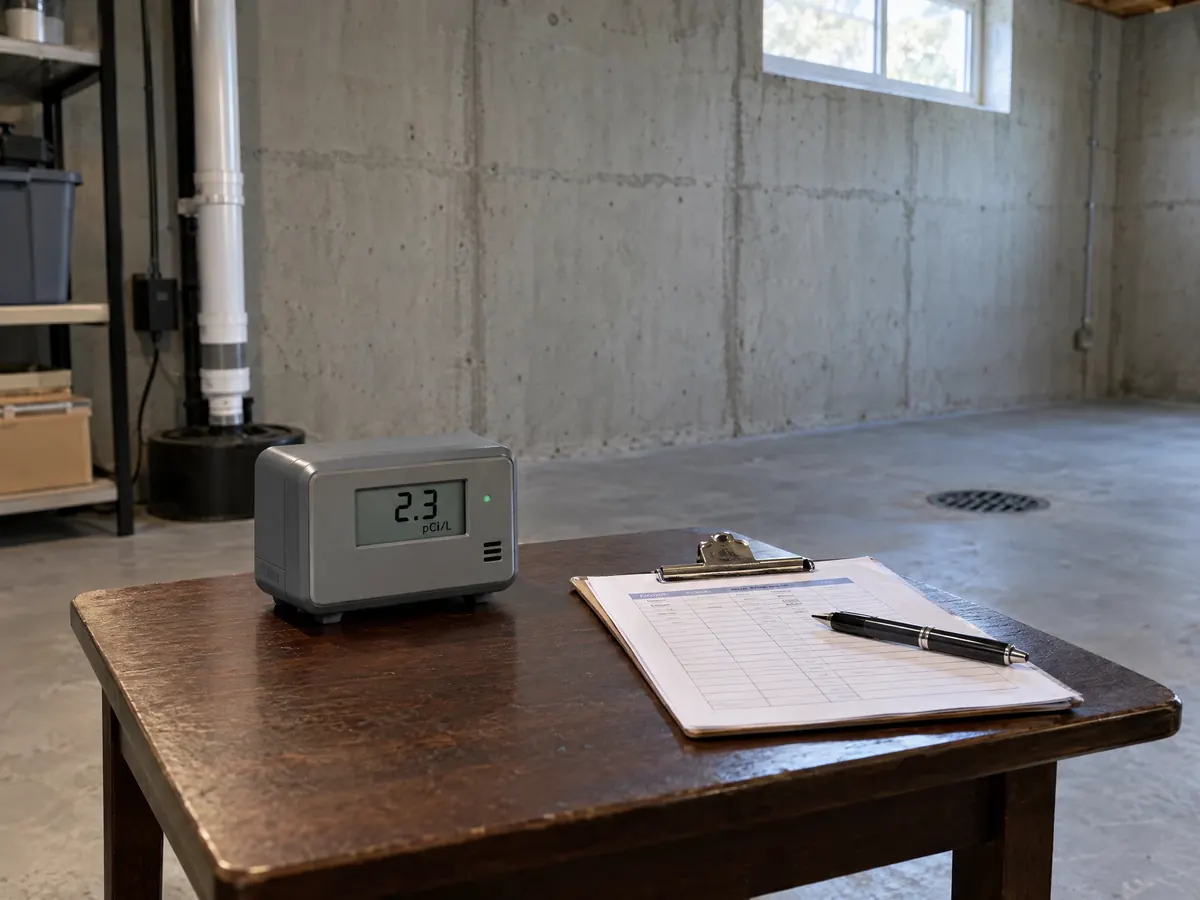
A continuous monitor records the concentration hour by hour, along with the conditions around it. That log is what makes a transaction result defensible.
Three results, three different next steps
We send the report and then talk it through with you, including when the honest answer is that nothing needs to be done.
Below 2.0 pCi/L
No action required. Retest every two years, and after any significant renovation, insulation or air-sealing work.
2.0 – 3.9 pCi/L
Below the action level but not zero risk. Confirm with a long-term test before deciding, and consider mitigation if anyone in the home smokes.
4.0 pCi/L and above
At or above the EPA action level. Mitigate, then verify. We will design the system from the reading and the building, not from a template.
- Fixed-price design follows the reading
- Verification test between 24 hours and 30 days
Not sure what your existing reading means? The scale on the home page answers that in one drag.
What the measurement is held to
ANSI/AARST MAH-2023
The national protocol for conducting measurements of radon and radon decay products in homes. It governs planning, placement, closed-building conditions, reporting and what to do when results disagree.
ANSI/AARST MS-QA-2023
The quality assurance system behind the instruments: calibration intervals, blanks and duplicates, warning and control limits, and documented corrective action.
ANSI/AARST MS-PC-2022
The performance specification the instruments themselves must meet, so a device is only used inside the range it was tested for.
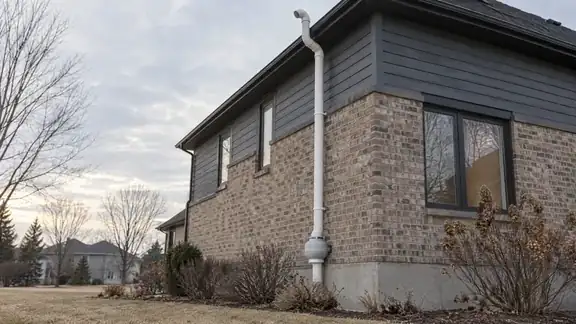
One test, run properly, then a decision you can defend
Tell us the property type and the deadline. We will tell you which test fits and book the window.