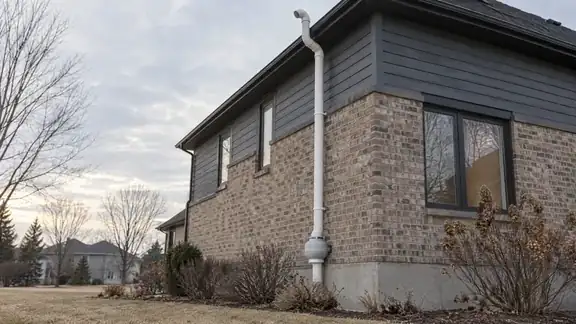
What it costs, with the ranges we actually see
Two prices matter: the cost of finding out, and the cost of fixing it if the number says you should. Both are national ranges below, followed by the property factors that decide where inside that range your job lands.
- Kit test
- $15 – $40
- Professional test
- $120 – $450
- Mitigation install
- $1200 – $4000
- Running cost
- $70 – $150 / yr
The cost of finding out
Testing is inexpensive relative to almost any other home decision, and the price is driven by the instrument and the protocol rather than by the size of the house.
Includes laboratory analysis and return postage on most kits. A screening measurement only.
Includes placement, collection, accredited laboratory analysis and a written report.
48-hour minimum, closed-house conditions, hourly logging and a signed report for the file.
Alpha-track detector exposed for 90 days or more; price reflects the analysis window, not the visit count.
Returned and run between 24 hours and 30 days after commissioning to prove the system works.
The cost of fixing it
The national average for a sub-slab depressurization system sits near $1,200 installed. A single suction point in an unfinished basement is at the bottom of the range; a crawlspace over a large footprint is at the top.
A single suction point in an open basement.
Driven by floor area, the number of piers to seal around, and how much material handling the space needs.
Added when diagnostics show the first point does not reach the whole slab.
A typical 70-watt fan running continuously. The cost is roughly that of a single light bulb left on.
Fans typically run five to ten years, longer for some models. Warranty length varies by manufacturer.
Often cheaper than coring a slab because the collection point already exists and needs no excavation.
The running cost of a mitigation system is roughly $70 to $150 a year — about the price of leaving a single light bulb on continuously. That is the ongoing cost of reducing a known lung cancer risk in the building your family sleeps in.
Five things that move the number
Foundation type
An open basement with a single slab is the simplest case. A finished basement, a crawlspace, or several slab sections at different levels each add work.
Number of suction points
Decided by diagnostic testing, not by square footage alone. Compacted or clay-heavy soils often need more than one.
Pipe route and fan location
A short run to a garage or gable wall costs less than a long run through finished space to reach a remote exterior wall.
Electrical work
A dedicated circuit at the fan location is normally straightforward. If the panel is full or the run is long, that changes the price.
Access and height
Crawlspaces with limited clearance, and homes where the discharge must clear a tall or steep roof, take longer.
How long each part takes
- T-01Inquiry to reply
- Within 1 business day
- T-02Short-term test on site
- 2 – 7 days
- T-03Transaction test
- 48 hours minimum
- T-04Laboratory turnaround
- 3 – 7 days
- T-05Inspection to proposal
- 1 – 2 business days
- T-06Installation
- One day, typically 6 – 10 hours
- T-07Verification test
- 24 hours – 30 days after
Ranges are not quotes, and we do not pretend otherwise
These are typical national ranges, not a quote. The price of any individual job depends on the foundation type, the number of suction points, the pipe route, the fan model and local labor rates. We give a fixed price in writing after the inspection, and we do not add to it afterward.