
Straight answers, including the inconvenient ones
Every question we are asked with any regularity is below. Where the honest answer is less comfortable than the reassuring one, we have written the honest one.
- Action level
- 4.0 pCi/L
- WHO reference level
- 100 Bq/m³
- Retest interval
- Every 2 years
- Reply to inquiry
- 1 business day
Everything we get asked, grouped by what you are deciding
Risk and levels
What exactly is radon?
A radioactive gas produced by the natural decay of uranium in soil and rock. It is colorless, odorless and tasteless, and it moves upward through the ground and into buildings through cracks, sumps, drains, block walls and gaps around service entries. Outdoors it disperses immediately; indoors it can accumulate.
How serious is it really?
The EPA attributes about 21,000 lung cancer deaths a year in the United States to radon, roughly 2,900 of them among people who never smoked. It is the leading cause of lung cancer in non-smokers and the second leading cause overall after smoking. The risk rises with concentration and with years of exposure, which is why the fix is about the long term rather than about a single reading.
Is there a safe level?
No level is known to be entirely free of risk, which is why the EPA also recommends considering mitigation below its action level. The action level of 4.0 pCi/L exists because it is a practical threshold: below it, the risk is comparable to other everyday risks, and above it, the case for acting is clear. The World Health Organization's reference level is lower, at 100 Bq/m³, about 2.7 pCi/L.
Why did my neighbor get 1.2 and I got 6.8?
Radon depends on the soil beneath the specific building, the foundation type and condition, and how the home is ventilated and heated. Two houses on the same street can differ by an order of magnitude. A neighbor's result tells you nothing about your own house, in either direction.
Testing
How long does a test take?
A short-term test runs 2 to 7 days and the laboratory result usually comes back within 3 to 7 days after the device is collected. A continuous monitor for a real estate transaction runs a minimum of 48 hours and the report is issued the same day it is collected. A long-term test sits for 90 days or more and results come back in 1 to 3 weeks after the device is returned.
Do I need to move out?
No. Testing is passive. You keep living in the home and we ask only that you do not disturb the device. A short-term or continuous test additionally needs the building closed for its test window; a long-term detector is the exception and sits through normal living conditions for 90 days or more.
Can I just test the basement?
You test the lowest level of the home that is regularly used. If the basement is only storage and the first floor is the lowest occupied level, that is where the measurement belongs. Testing a crawlspace or an unused cellar measures a space nobody breathes.
Is winter really worse?
Usually, yes. The stack effect is strongest when the indoor–outdoor temperature difference is largest, and closed windows reduce dilution. A summer short-term reading can understate the annual average, which is one reason a result in the 2 to 4 pCi/L band deserves a long-term confirmation.
Can a home inspector's test be relied on?
Only if it was performed under the national protocol, in the right location, with closed-building conditions documented, using a calibrated device, and reported with the conditions attached. A number without those details is a suggestion, not a measurement.
Mitigation
Does sealing cracks and painting the floor fix it?
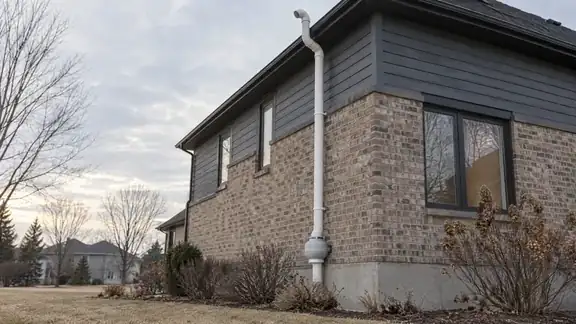
No. Sealing is a supporting measure, never a standalone solution. Soil gas is under pressure and will find the next available path; the only reliable approach is to reverse the pressure so gas is drawn away from the building rather than pushing into it.
How much does a system reduce the level?
A correctly designed system typically brings a home below 2 pCi/L, and very often below 1.0 pCi/L. The honest answer is that the reduction is not guaranteed until it is measured, which is why a verification test is part of the job rather than an optional extra.
Will the fan be noisy or expensive to run?
Modern radon fans are usually quieter than a refrigerator when mounted outside the living space. Running cost is roughly $70 to $150 a year for a typical 70-watt fan, about the same as leaving one light bulb on continuously.
How long does a system last?
The pipework lasts the life of the building. The fan is a mechanical part running continuously and is typically replaced every five to ten years, sometimes longer. Keeping the model on file turns that into a same-day swap.
What if my levels are high but I cannot afford a system?
Tell us. Where a system is out of reach right now, we will talk through interim measures — increasing ventilation in the lowest level, avoiding sleeping areas there, and prioritizing a re-test — and we will be straightforward that these reduce exposure rather than solve the problem.
Buying and selling
Who pays for the test in a transaction?
It is negotiated, but in most transactions the buyer commissions the test during the inspection period. If the result is at or above the action level, mitigation usually becomes a negotiating point before closing.
Can mitigation be completed before closing?
Often, yes. A standard installation takes one day, and scheduling normally fits inside a typical inspection period if we are contacted as soon as the result is known. Say the closing date in your first message and it becomes a scheduling problem instead of a deadline problem.
Does a mitigation system affect the value or insurance of a home?
It removes a known hazard and comes with a written report showing the before and after readings, which is what a lender, an appraiser or a future buyer actually asks for. A documented system is straightforward to explain; an untreated elevated reading rarely is.
Working with us
Do you do anything other than radon?
No. Radon measurement and soil gas mitigation is the whole business. We do not sell air purifiers, waterproofing or general contracting, so there is nothing else we are steering you toward.
What are your credentials?
Measurement is performed by NRPP-certified radon measurement professionals and mitigation by NRPP-certified mitigation specialists. Work follows ANSI/AARST MAH-2023 for measurement and ANSI/AARST SGM-SF-2023 for mitigation, under a documented quality assurance program to ANSI/AARST MS-QA-2023. Licensing requirements vary by state and the number appears on every report.
How quickly will you reply?
Within one business day, always with a person rather than an automated acknowledgment.
Not answered here?
Ask it directly. Questions we cannot answer from a description get a site visit rather than a guess, and we will tell you which of the two it is in the reply.
Still deciding? Start with the measurement
A test is the cheapest part of this decision and the only part that tells you whether the rest is needed.