
 01 / Test · 02 / Mitigate · 03 / VerifyResidential radon services
Find the number.
Fix the source.
Prove it worked.
The EPA action level is 4.0 pCi/L, and roughly one home in fifteen in the United States sits at or above it. Radon has no smell and no color, so the only way to know where your house stands is to measure it. We do the measuring, the fixing, and the measurement that proves the fix worked.
We service existing single-family homes, multifamily, schools, and commercial buildings. Also new construction, R1 and R2 family dwellings.
We are NRPP and KDHE certified.
- EPA action level
- 4.0 pCi/L
- Test window
- 2 – 7 days
- Installation
- One day
Radon is the second leading cause of lung cancer after smoking, and the first among people who have never smoked. The risk builds silently over years, which is why the fix is about the long term rather than about a single reading. Sources: US Environmental Protection Agency.
A radioactive gas produced by the ground under the house
Uranium occurs naturally in soil and rock. As it decays it produces radium, and radium produces radon — an odorless, invisible gas that moves upward through the soil. Outdoors it disperses in seconds. Indoors it collects, because a house is a warm, tall box sitting in ground that is slightly cooler and slightly pressurized.
That pressure difference — strongest in winter, weakest in summer — pushes soil gas toward the building. It does not need a crack to do it. Any pathway, however small, is enough.
How testing works →- Cracks and control joints in the slab
- Sump pits, drain tile and floor drains
- Hollow block foundation walls
- Gaps around pipes, wiring and service entries
- Exposed soil in a crawlspace
Sealing these is part of the work, but never the whole of it. Soil gas is under pressure and will find the next available path.
Put your own reading on the scale
A radon result is a concentration, not a yes or a no. Drag the needle to whatever your test reported — a kit, a monitor, or the result a buyer's inspector handed you — and read what that number actually calls for.
- 0 – 2Below the range where the EPA recommends action
- 2 – 4Below the action level, but worth watching
- 4 – 10At or above the EPA action level
- 10+Well above the action level — treat it as urgent
Below the range where the EPA recommends action
No action is required. Retest every two years, and again after major air-sealing or renovation work, because changes to a building's pressure balance move soil gas.
Drag the needle to your own result
Test first, mitigate only if the number says so
We do not sell mitigation to people who do not need it. Testing stands on its own, and a large share of the homes we test need nothing done to them at all.
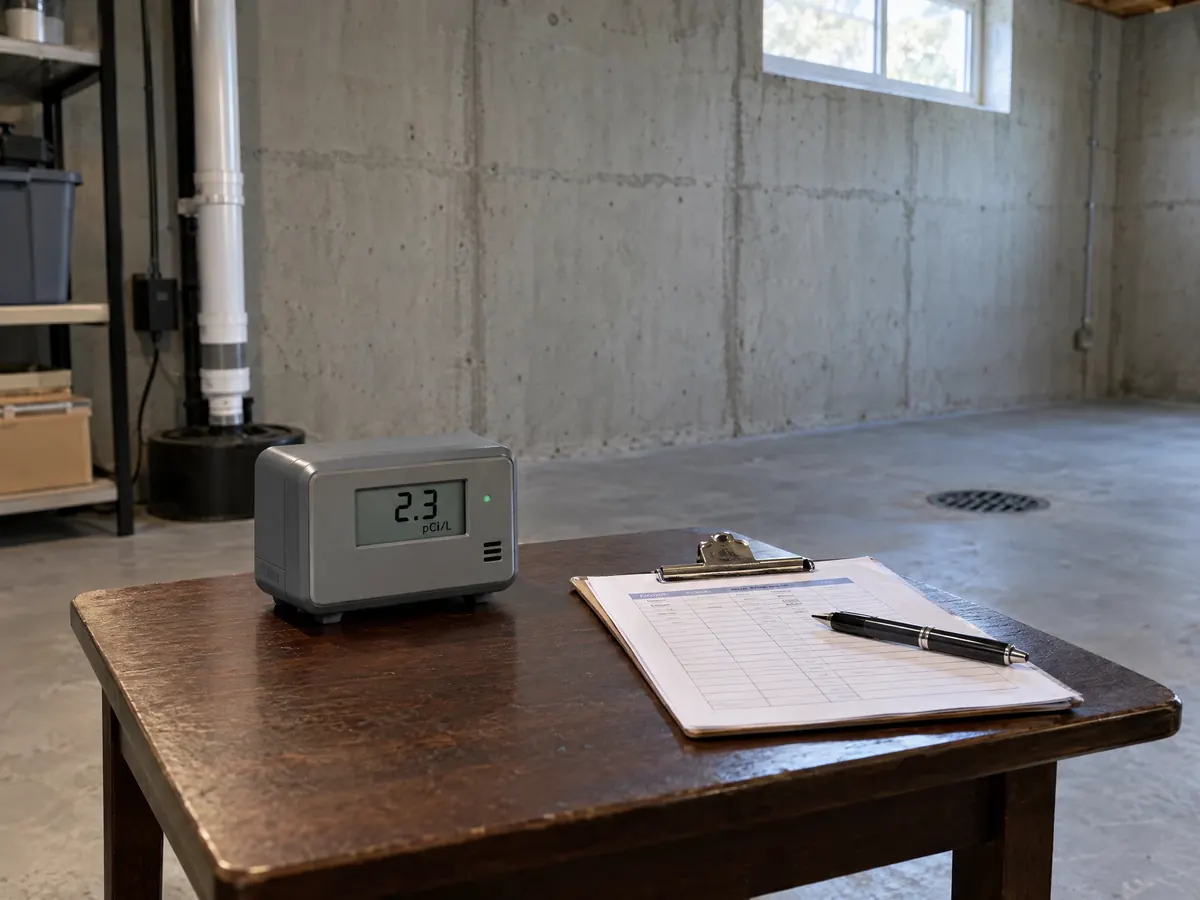
Testing
A measurement you can act on, taken in the right place, under the right conditions, analyzed by an accredited laboratory.
- Short-term test2 – 7 days
- Long-term test90 days to 12 months
- Continuous monitoring — real estate transactions48 hours, minimum
- Do-it-yourself test kits2 – 7 days (kit dependent)
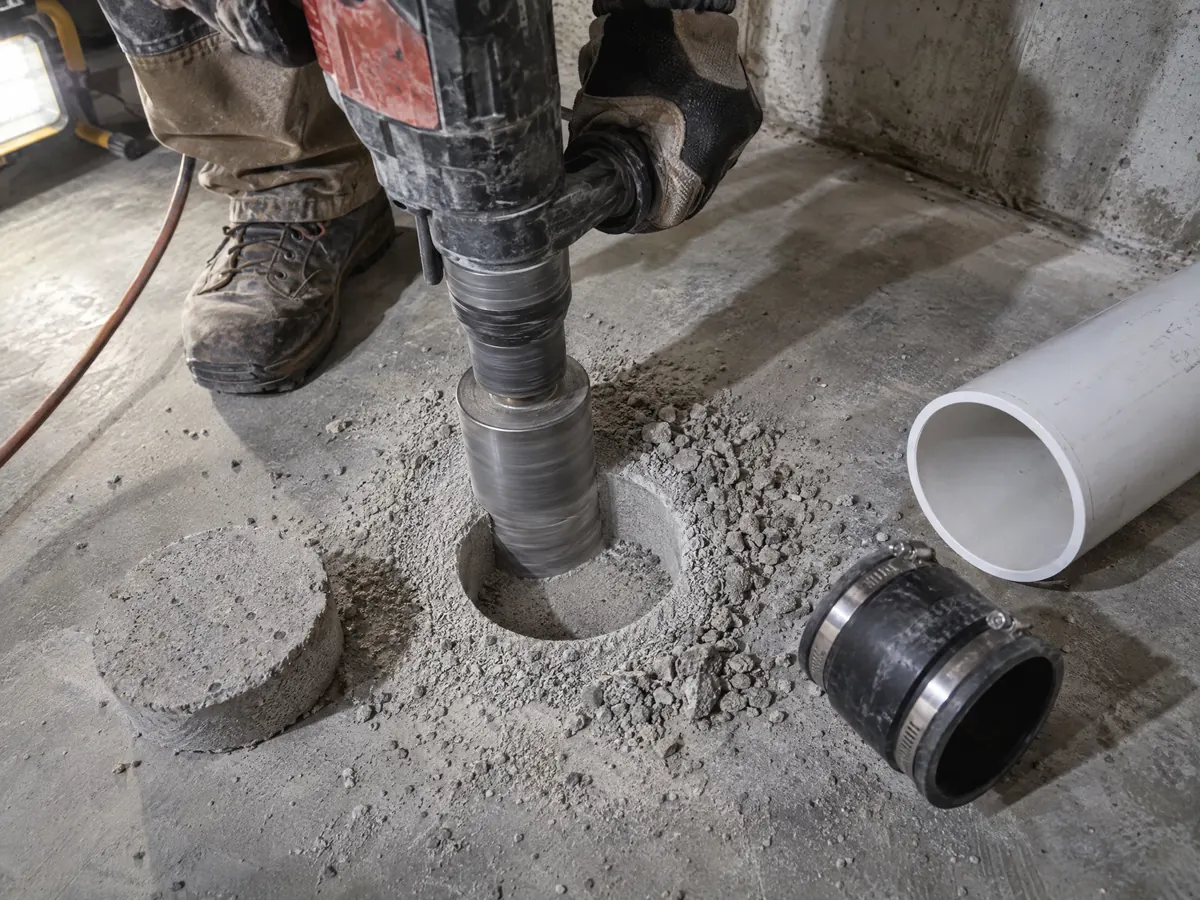
Mitigation
Soil gas is reversed away from the building instead of pushing into it — designed from diagnostics, installed in a day, and verified afterward.
- Sub-slab depressurizationM-01
- Crawlspace sub-membrane depressurizationM-02
- Sump and drain-tile depressurizationM-03
- Block-wall and hollow-foundation depressurizationM-04
Three clauses, no surprises
Every job follows the same sequence, and you always know which clause you are in. Full detail, including what happens on installation day, is on the process page.
What to expect- 01
Test
Placement, closed-building conditions, accredited analysis and a written report. 2 to 7 days, or 48 hours for a transaction.
- 02
Mitigate
Inspection and diagnostics, a fixed-price design, one day on site, and a system labeled and demonstrated before we leave.
- 03
Verify
A post-mitigation measurement between 24 hours and 30 days after commissioning. The system is not finished until the number says so.
Coverage, before you get your hopes up
Tests are placed and collected by us in the core area, and outside it we post kits and return them by prepaid mail. Mitigation installations are carried out across both bands.
Serving Solomon and communities across central Kansas. Every address is confirmed before scheduling.
Ask Brian about an address outside the normal central Kansas service area.
Every inquiry gets a reply within one business day. Core area ZIP codes are listed on the service area page.
Measured and mitigated to the national standards
Radon work is not licensed uniformly across the country, so the standards and credentials behind it are the thing worth checking. Ours are listed in full on the about page.
NRPP-certified measurement professionals
Brian Gillett is an NRPP Radon Measurement Professional (RMP116198).
NRPP-certified mitigation specialists
Brian Gillett is an NRPP Radon Mitigation Specialist (RMS116199).
Kansas-certified radon technician
Kansas Department of Health & Environment Radon Mitigation Technician certification KS-MI-0287 Radon Measurement Technician certification KS-MS-0743
ANSI/AARST MAH-2023
Every measurement in a home follows the national protocol for conducting measurements of radon and radon decay products in homes.
ANSI/AARST SGM-SF-2023
Every installation follows the soil gas mitigation standard for existing homes, including commissioning and labeling requirements.
ANSI/AARST MS-QA-2023
Instruments are operated under a documented quality assurance program with device calibration, blanks, duplicates and control limits.
The five we answer most
Every question we are asked with any frequency is on the FAQ page, answered without hedging.
All questionsWhat exactly is radon?
A radioactive gas produced by the natural decay of uranium in soil and rock. It is colorless, odorless and tasteless, and it moves upward through the ground and into buildings through cracks, sumps, drains, block walls and gaps around service entries. Outdoors it disperses immediately; indoors it can accumulate.
How serious is it really?
The EPA attributes about 21,000 lung cancer deaths a year in the United States to radon, roughly 2,900 of them among people who never smoked. It is the leading cause of lung cancer in non-smokers and the second leading cause overall after smoking. The risk rises with concentration and with years of exposure, which is why the fix is about the long term rather than about a single reading.
Is there a safe level?
No level is known to be entirely free of risk, which is why the EPA also recommends considering mitigation below its action level. The action level of 4.0 pCi/L exists because it is a practical threshold: below it, the risk is comparable to other everyday risks, and above it, the case for acting is clear. The World Health Organization's reference level is lower, at 100 Bq/m³, about 2.7 pCi/L.
Does sealing cracks and painting the floor fix it?
No. Sealing is a supporting measure, never a standalone solution. Soil gas is under pressure and will find the next available path; the only reliable approach is to reverse the pressure so gas is drawn away from the building rather than pushing into it.
How much does a system reduce the level?
A correctly designed system typically brings a home below 2 pCi/L, and very often below 1.0 pCi/L. The honest answer is that the reduction is not guaranteed until it is measured, which is why a verification test is part of the job rather than an optional extra.
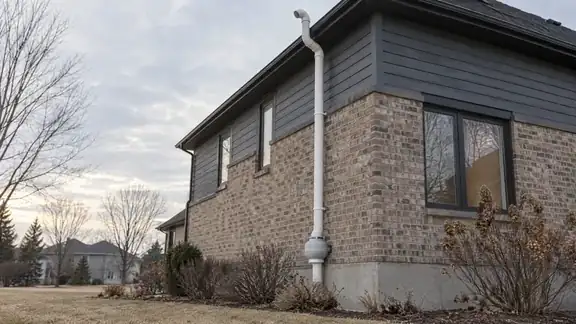
Get a number, then decide what to do about it
Tell us the property and the question you need answered. You get a fixed price and a scheduled window, not a sales visit.